Skip to Content

Sunday

a layne post

A loud show played in the background, my sofa scattered with sleepy girls buried under their colorful silky blankets their grandma made when they were born. As I jog down the stairs, I call out, “One hour!” because if you know me, even a little, you know I hate to be late. As I walked through the kitchen, my puppy, Humphrey, wriggled at my feet, sneaking a lick of my toes from time to time, making me squeal, ‘Gross!’. I rise to my tippy toes and lean across the kitchen sink to peek out my kitchen window see if anyone was moving around out back. It is Sunday morning and few patients will commit to going to church ahead of time, it’s going to depend how they slept. I’ve lived with cancer patients almost fourteen years now, and I am keenly aware that how someone feels can change by the minute.  

I scoop Humphrey up to take him potty outside, and see one of our young patients. He is walking back into our pedestrian gate, a plastic grocery bag in hand filled with fresh Mozambican bread bought next door. His nice outfit, one of the few he brought with him to my house, indicates he will come to church today. I was surprised as he had a round of chemotherapy only a couple of days before, but forgetting the hospital had run out of half of his treatment and he had only gotten part. “Bom dia!” I say loudly with a wave. “Wow!” I exclaim with my eyebrows raised, “you look so handsome.” He giggles and bashfully looks down saying, “Obrigado,” with a smile to rival the best of them. He really is handsome.

A wave of love comes over me.

No one else was feeling up to the car trip and hard chairs, so there was no need for two cars this morning. I hop in the backseats with the girls and tell him to sit up front with Jon. It was our church’s first day at a new-to-us building. Upon arrival I could hear the worship music from the sidewalk. We followed the melody inside and the first thing I noticed was that we would need to walk upstairs. Steep stairs.

A wave of worry comes over me.

I casually put myself behind him, to make sure he wasn’t too weak, but also not wanting to hover, as he is a teen. He is fine; however, I cannot help but notice his thin body as I trail him. We find our seats, and I flash a smile to a few people, giving small waves, not wanting to be too distracting since worship had already started. Everyone is standing. He sits.

A wave of sadness comes over me.   

I frantically try and pull it together. I know if a tear falls a full-on sob might take over. He’s dying. I want to lean over a hug him hard, but I hold it in, he is a teen.

I love him.

This is going to be hard.
Conversations

I walked up as she sprawled on the cushioned wicker couch with a bowl of porridge resting on her small frame. No words necessary, she was wasted.

“How you doing?” I asked gently.

“Weak,” she quietly responded.

“I can see that. It’ll pass,” I assured, as I know these chemo rhythms well.

“It will?” she begged reassurance. This was her first round of chemotherapy.

“100%. Ask around you,” I offer, as I pointed to the other Casa Ahavá patients under the shade.

Everyone nods.  

“When did you finish up treatment?” I ask.

“Saturday.”

“Ok,” I offer grin. “By Saturday you’ll be feeling much better. Promise.”

She gave me a weak smile of relief…a little hope to hang onto.  

_____________________________________________________________________

“How’s it looking?” she asked.

I peel the bandage off and give a wipe. My face twists into a ponder. What can I say? It isn’t getting better.

I pause, take in a breath and then try not to sound hopeless as I report, “Well… it is clean!”

“But what are they going to do? Isn’t there an operation?” she pleads.

I gently press the tape around the piece of gauze, making sure it isn’t bugging her nose.

“I wish. We are hoping chemo will shrink the mass. It’s too big to operate.” I reply, gently shaking my head.

It isn’t quite time for the difficult conversation. We need to see if chemo can shrink it some and offer better quality of life.

“Let’s give it another couple rounds of chemo and then we’ll see, alright?”

“Ok,” she says cheerfully with her easy smile. “Tchau!”

_____________________________________________________________________

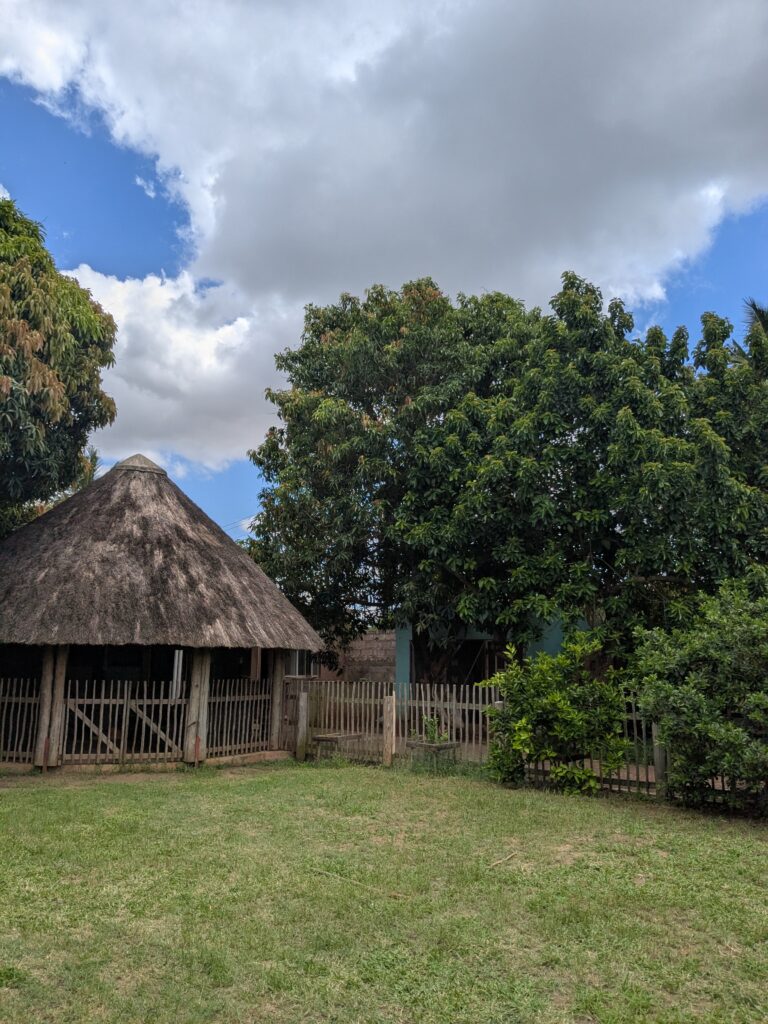
I frown as I come under the thatched shade.

“I see you,” I say seeing her face, jokingly wagging my finger at here. “You are in pain.”

She shrugs. This is her life.

A familiar pang in my own chest.

She is laying on her side massaging her own lower back.

“You ready to try morphine? I have some,” I offer/beg. I hate to see her suffer so much.

“No, Mama,” she shakes her head, replaying in her mind’s eye everyone she has known who took morphine. She’s afraid. They are either dead or dying.

“Alright,” I listen and remind her that we can start low or just use some as rescue medicine for really rough times.

She is insistent. No morphine.  

“Well, you know where I am. Just ask me,” I say with my eyebrows raised like a Mama.

We switch the conversation and talk about her kids at home.

_____________________________________________________________________

“Bom dia!” I holler across the yard as I begin to walk over.

He is watering the small garden.

“How did you wake up?” I ask, but as I approach I can see. His eye is more swollen today than yesterday. I wince just a bit.

“I am okay,” he says. “It’s just my eye,” he explains, “it hurts, but the rest of my body is good. I am strong,” motioning with his arms his strength.

“I know!” I exclaim. “You never stop working around here!”

“Have you been taking the morphine syrup?” I remind him.

“Yes, but the pain comes back,” he answers.

My lip sticks out a bit as I try to communicate compassion.

“I am so sorry. I’ll keep checking,” trying to offer any reassurance.

As I walk away I let out a private, helpless sigh.

______________________________________________________________________

“Hey, babe!” I answer the phone.

“Hey. I finally got her results from the lab. She still has cancer; it’s in her lymph nodes. The recommendation is to come back and do a different line of chemo,” Jon says.

I hear the disappointment. I feel it, too.

“I gotta call and tell her,” he resigns.

My whole body slumps.

Dang it.

We really wanted this one. We don’t get a lot of hopeful cases.

“Ok,” I sigh. “Love you. Bye.”

­­­­­­_______________________________________________________________________

I believe in presence,

in bearing witness,

in community.

I believe knowing you aren’t alone matters,

having someone to lament with you matters,

having someone to fight for you matters,

having someone to rub your back matters,

smiles matter.

Thank you to every single one of you that supports us and the work we do.

Casa Ahavá cannot run without out you. I hope you know what a difference you are making.

Starting Something New

It’s been 15 years and we are still here. All appearances are that this is the wrong time to be trying to begin a new work here in Mozambique. Political and social revolution threaten the stability of an already unstable country and the fires of burning tires and burning hearts threaten to engulf this fragile nation in their anger.

We don’t know why Christ has laid it on our hearts to ask this now but we do so in a humble, though confused, obedience to His nudging on our hearts.

For 15 years at Casa Ahava we have served the sick and the dying in Mozambique who are transferred to the Maputo Central Hospital to receive cancer care from their distant homes to the north. These patients come from great distances and have no home or family.

Now we turn our gaze to that great sea of suffering that remains in the community around Casa Ahava and our family and we see what Christ has asked us to see among the Maputo and Matola populations.

Please watch this video and consider helping us build something for them too.

Heller Family Car

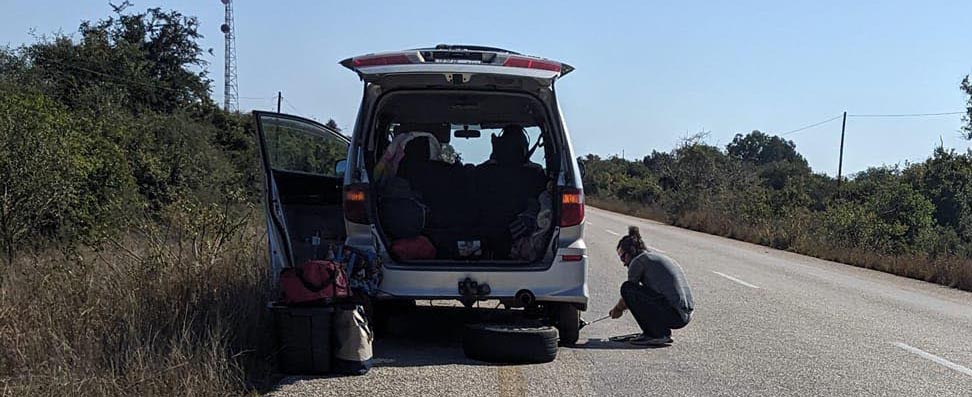
It is never easy to ask for help with things like this. Our old family van has served us well these many years but the broken and punishing Mozambican roads have taken their toll. Welded and pieced together on a Toyota assembly line in 2003, 21 years were just too many for a family van to survive the brutal realities of the roads here.

We need help.

Our family van primarily serves Layne and our daughters but it has always doubled as a transportation for Casa Ahava patients and supplies as needed. Whatever purchase we can afford to make with your help will continue to do the same.

We live in gratitude and with our hat in our hands, knowing and trusting that faithful loved ones the world over believe in what we do and believe in our family.

Thank you.

Church Clothes

A Jon Post

It’s an important day in my faith tradition. All the pageantry and performance of the day coalesce into sunrise services, liturgical dances, ecstatic praises, and reprises of Keith Green singing “Hear the Bells Ringing”.

But here I sit on one of the many plastic chairs that line the school gymnasium that passes for a church building on Sunday mornings in Maputo, and I’m thinking about my church clothes.

Pristine, they hang in my closet most days smelling of detergent or dust, depending on how long it has been since I’ve felt the need to dress up. Today, my pink button-up shirt and dress-up jeans won the day, and I joined in the Easter custom of wearing bright colors and new-life-spring-has-sprung-themed clothing on a day welcomed by Christians around the globe as our most momentous and worthy of celebration. But my church clothes have a particular smell to them that keeps distracting me from the joyous occasion.

I spent the morning carrying a 19-year-old boy from bed to shower, from shower to chair, and from chair to wheel-chair. He has lost all strength or control of his legs as lymphoma has claimed nerve ending upon nerve ending throughout his body as its own. Lymphoma has spread twisted versions of white-blood cells into blood stream and body, pushing aside the bits and pieces that used to respond to the will of the person who used to call them his own. His legs and one arm no longer respond to his bidding and so I carry him from place to place in their stead.

He is dying.

I smell it on my church clothes.

I smell it on my shoulder where he laid his head as I picked him up from his bed and carried him to the shower chair, where he washed away the work he did in the night of staying alive and breathing. I smell it on my right forearm where his knees draped as I carried him back to a plastic chair to dry his frail body. I smell it on my hands where I picked up one limp foot then another, shucking jeans that used to be the right size but are now far too big, up his legs and to his waist. I smell it on my chest where he leaned as I put him in my car. I smell it on my beard where his head lay as I pulled him back out and put him in our wheelchair.

The angels of death and age walk hand in hand, smiling as they go. Though often thought of as malicious, they mean no more ill than did Jacob’s angel, and they too can be wrestled with for the sake of a blessing. When a 19-year-old wrestles with his angel of death, that angel’s close friendship with the angel of age means both tend to smell the same. If you have ever accompanied one of your own very old ones, you likely know the smell. So too, our dying bear that smell. It has taken me several years of wrestling to get used to the smell but I no longer resent it as I once did. It smells like our old ones. It smells like our ancestors. It even smells like a tomb. And I smell it on my pink-spring-has-sprung, button-up shirt.

This day, most Christians focus on the story told in the Gospel narratives of an empty tomb, and a resurrection and the hope of salvation.

But not all.

For some, the hope, the joy, the celebration, the liturgy of “He is risen! He is risen, indeed!” is as painful as the tumors and malignancies in body and soul that accompanied them to that pew, cushion, or plastic chair. For some, the tears fall today as easily as the smiles comes to the rest of the church. For some, all promise of “for those who believe” is only another pronouncement of the brokenness of the body and the pouring of the blood to go along with the brokenness of the promises and hopes for healing. No testimony, nor truth-telling, nor tithing could bring the miracle once so desperately hoped for and believed in and now that brokenness sits in the pew, the cushion, the plastic chair, or, as in our case, the wheel-chair.

Some of us are as perplexed as were John and Peter when they found grave clothes where they expected their friend. Some of us still smell like them.

That’s what today means to some of us. Hear me in this, beloved: It is the right day for that.

If you go today to your pew, your cushion, or your plastic chair and you listen closely and sniff the air around those who may have wrestled in the night, do me this favor: Echo the words of that one who is risen and say “Come unto me, all who are labor and are heavy laden, and I will give you rest.” Then follow it up with a simple, “Eat and drink with us, you are no freak and we are not freaked out by your suffering”